Shoulder Pain Treatment That Restores Reach, Strength, and Sleep
Pain reaching overhead, trouble sleeping on your side, or a shoulder that aches every time you lift — Dr. Jordan Sanderson and our team evaluate your shoulder, neck, and upper back to find what’s driving your pain, then build a plan to restore motion and strength.
Why Shoulder Pain Happens
Your shoulder is the most mobile joint in your body. That range of motion comes at a cost: the ball of the upper arm sits in a shallow socket, and it depends on four small rotator cuff muscles and the shoulder blade beneath them to stay stable and centered.
When those muscles are overloaded, weakened, or irritated — from repetitive reaching, poor posture, a fall, or a car accident — the tendons can become painful and the joint can lose its smooth motion. Stiffness in the upper back and neck can add to the problem, and irritated nerves in the neck can even refer pain into the shoulder.
We take the time to explain what’s happening in your shoulder, because understanding your injury is the first step toward taking control of your recovery.
Common Causes of Shoulder Pain
Shoulder pain can come from the tendons, the joint, or the neck. These are the patterns we evaluate and treat most often.
Rotator Cuff Tendinopathy
- Aching on the outside of the upper arm
- Pain reaching overhead or behind your back
- Pain lying on the affected side
Calcific Tendinitis
- Intense, sometimes sudden shoulder pain
- Calcium deposits seen on X-ray or ultrasound
- Pain that disrupts sleep
Shoulder Impingement
- Pinching pain when raising the arm
- A painful arc between shoulder and head height
- Clicking or catching
Frozen Shoulder
- Gradual, progressive stiffness
- Loss of motion in every direction
- Aching that’s worse at night
Rotator Cuff Tears
- Weakness lifting or rotating the arm
- Pain after a fall or sudden pull
- Difficulty holding the arm up
Pain Referred From the Neck
- Shoulder pain with neck stiffness
- Pain along the top of the shoulder blade
- Tingling down the arm
Accident-Related Shoulder Injuries Need Prompt, Well-Documented Care
The seatbelt restraint and bracing against the steering wheel on impact can strain the rotator cuff and shoulder joint, and pain often builds over the following days. Early evaluation protects both your recovery and your claim.
- The 14-day window — in Florida, you generally need initial treatment within 14 days of the accident for PIP benefits to apply.
- Direct PIP billing — we handle the auto insurance billing for you.
- Legal representation accepted — we work directly with your attorney so treatment isn’t delayed.
- Objective measures — range of motion and strength testing documented at every visit.
Auto Injury Resources
Learn how we treat accident injuries and what documentation protects your claim.
Overcome. Perform. Empower.
A structured, three-phase plan with a clear goal at every step — so you always know where you are in your recovery.
1
Overcome
Calm pain and tendon irritation, restore shoulder motion, and identify exactly what’s driving your symptoms.
2
Perform
Rebuild rotator cuff and shoulder blade strength so you can reach, lift, and sleep without pain.
3
Empower
Leave with the habits and exercises to keep your shoulders strong and healthy long term.
Evidence-Based Treatment for Shoulder Pain
A systematic review in the Journal of Shoulder and Elbow Surgery found high-energy shockwave therapy to be the most thoroughly studied minimally invasive treatment for chronic calcific rotator cuff tendinopathy, with moderate-quality evidence for pain relief and improved function (reference).
After a full evaluation, we combine the treatments that fit your findings — with progressive strengthening at the center of every shoulder plan.
Focused Shockwave Therapy
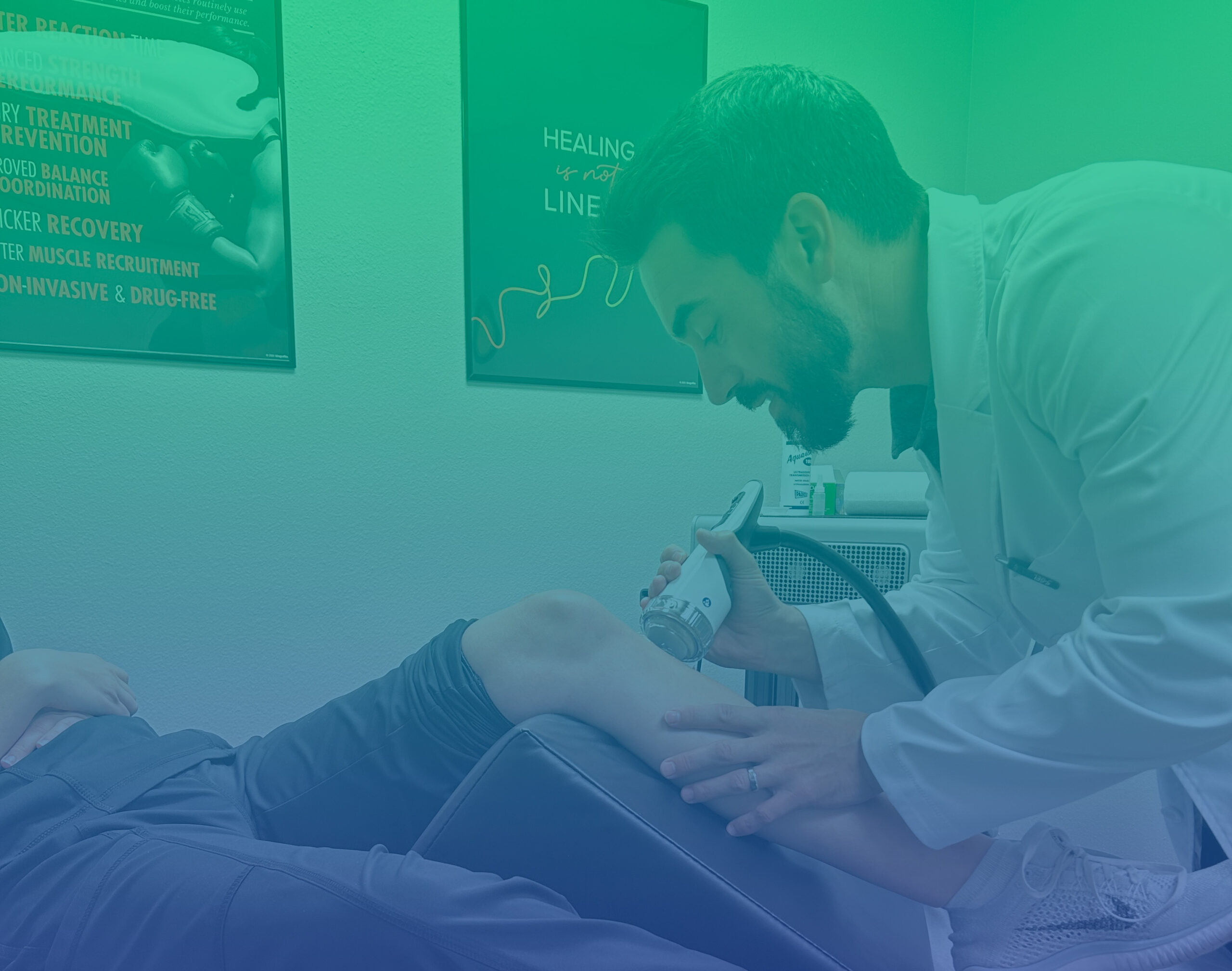
The STORZ Duolith SD1 for rotator cuff tendinopathy, calcific tendinitis, and stubborn soft tissue pain.
Functional & Strength Exercise
Progressive rotator cuff and shoulder blade strengthening to restore stability and control.
Manual Therapy & TENS
Soft tissue work and TENS to ease pain and release guarded muscles around the shoulder.
Shoulder Mobilization
Gentle joint mobilization to restore smooth, comfortable motion in a stiff shoulder.
Chiropractic Adjustments
Neck and upper back adjustments to improve the posture and mechanics the shoulder depends on.
Kinesiology Taping
Support for the shoulder muscles between visits without limiting movement.
“Centering” Coaching
Posture and shoulder-position habits for work, driving, and sleep.
Nutrition Coaching
A consultation with a registered dietitian to support tissue healing and manage inflammation.
When Shoulder Pain Needs Immediate Medical Attention
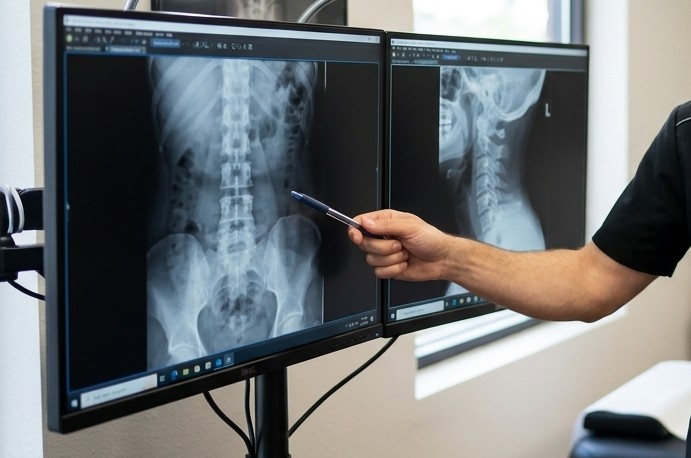
Call 911 if shoulder pain comes with chest pain or pressure, shortness of breath, sweating, or pain spreading to the jaw or arm — these can be signs of a heart attack. Seek urgent care for a visible deformity or sudden inability to lift the arm after a fall or collision, or a hot, swollen shoulder with fever. During your evaluation, we screen for these warning signs and refer for imaging or specialist care when your findings call for it.
Shoulder Pain FAQs
Can shockwave therapy help shoulder pain?
Focused shockwave therapy is well studied for rotator cuff tendinopathy and calcific tendinitis, especially when pain hasn’t responded to other conservative care. We combine it with strengthening so the tendon can handle load again.
Should I rest my shoulder or keep using it?
Complete rest usually leads to more stiffness and weakness. We’ll show you which movements are safe while it heals and progress your exercises as your shoulder calms down.
Do I need an MRI?
Not always. Many shoulder problems can be evaluated with a hands-on exam. We refer for imaging when there’s significant weakness, a suspected tear, a recent injury, or symptoms that aren’t improving.
Can a neck problem cause shoulder pain?
Yes. Irritated joints or nerves in the neck commonly refer pain to the top of the shoulder and shoulder blade. That’s why every shoulder evaluation includes the neck and upper back.
How long does shoulder pain take to improve?
It depends on the cause. Tendon problems often improve over several weeks of consistent care, while frozen shoulder and larger injuries take longer. We set clear goals for each phase so you always know where you stand.
Where are you located?
We’re at 1203 Jacaranda Blvd., 2nd Floor at Venice Healthpark, Venice, FL 34292 — convenient to patients from Venice, Nokomis, Osprey, North Port, and Englewood.
Ready to Reach, Lift, and Sleep Without Shoulder Pain?
Schedule an evaluation with Dr. Jordan Sanderson in Venice, FL.