Elbow Pain Treatment That Gets Your Grip Back
Pain gripping a coffee cup, turning a doorknob, or swinging a club or racket — Dr. Jordan Sanderson and our team evaluate your elbow, wrist, and neck to find what’s driving your pain, then build a plan to restore strength and comfort.
Why Elbow Pain Happens
The muscles that grip, lift, and twist your hand and wrist all anchor at the elbow through a few small tendons. Every time you grip a tool, type, lift a bag, or swing a racket or club, those tendons absorb the load.
When that load repeatedly outpaces what the tendon can handle, it becomes irritated and painful — the problem behind tennis elbow and golfer’s elbow. Despite the names, most people who develop them don’t play either sport; repetitive work and household tasks are far more common causes.
Nerves that pass the elbow can also be irritated, and problems in the neck can refer pain into the forearm. We take the time to find the true source and explain it clearly, so you understand exactly how your treatment works.
Common Causes of Elbow Pain
Elbow pain usually comes from overloaded tendons, but nerves and the neck can play a role too. These are the patterns we evaluate and treat most often.
Tennis Elbow
- Pain on the outside of the elbow
- Pain with gripping, lifting, or turning a doorknob
- Weaker grip
Golfer’s Elbow
- Pain on the inside of the elbow
- Pain with gripping or wrist flexing
- Stiffness in the forearm
Biceps & Triceps Tendon Pain
- Pain at the front or back of the elbow
- Pain with lifting, pushing, or pressing
- Tenderness where the tendon attaches
Ulnar Nerve Irritation
- Tingling in the ring and pinky fingers
- Symptoms with the elbow bent for long periods
- Clumsiness or weaker grip
Elbow Bursitis
- Swelling at the point of the elbow
- Tenderness when leaning on the elbow
- Warmth or redness in some cases
Pain Referred From the Neck
- Forearm pain with neck stiffness
- Tingling into the hand
- Pain that doesn’t match a single tendon
Accident-Related Elbow Injuries Need Prompt, Well-Documented Care
Bracing against the steering wheel, striking the door, or airbag deployment can strain the tendons and joints of the elbow and forearm. Pain often builds over the following days. Early evaluation protects both your recovery and your claim.
- The 14-day window — in Florida, you generally need initial treatment within 14 days of the accident for PIP benefits to apply.
- Direct PIP billing — we handle the auto insurance billing for you.
- Legal representation accepted — we work directly with your attorney so treatment isn’t delayed.
- Objective measures — grip strength and range of motion documented at every visit.
Auto Injury Resources
Learn how we treat accident injuries and what documentation protects your claim.
Overcome. Perform. Empower.
A structured, three-phase plan with a clear goal at every step — so you always know where you are in your recovery.
Overcome
Calm tendon irritation and pain, and identify exactly what’s driving your symptoms.
Perform
Rebuild grip, forearm, and shoulder strength so you can work, lift, and play without flare-ups.
Empower
Leave with the habits, ergonomic strategies, and exercises to keep your elbows healthy long term.
Evidence-Based Treatment for Elbow Pain
A 2024 systematic review and meta-analysis comparing shockwave therapy with corticosteroid injections for chronic tennis elbow found that injections worked faster in the first month, but shockwave therapy provided better results at 3 and 6 months, with similar rates of mild side effects (reference).
A 2023 randomized, sham-controlled trial (Journal of the College of Physicians and Surgeons Pakistan) found that both focused and radial shockwave improved tennis elbow pain and function while sham treatment did not, and that focused shockwave, the type we use, produced greater improvement than radial (reference).
After a full evaluation, we combine the treatments that fit your findings — with progressive strengthening at the center of every elbow plan.
Focused Shockwave Therapy
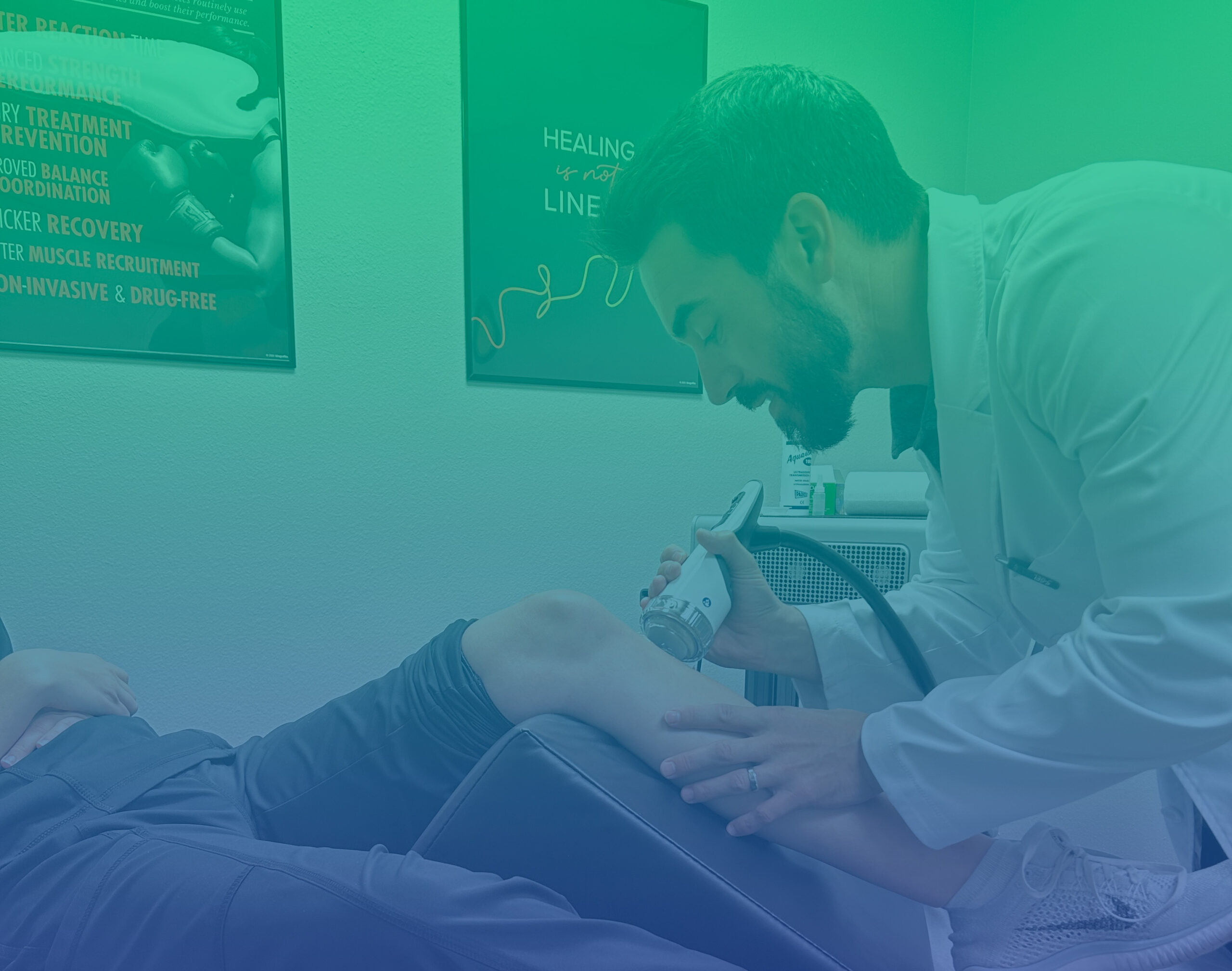
The STORZ Duolith SD1 for tennis elbow, golfer’s elbow, and stubborn tendon pain.
Functional & Strength Exercise
Progressive tendon-loading and grip strengthening to rebuild the forearm.
Manual Therapy & TENS
Soft tissue work and TENS to ease pain and release tight forearm muscles.
Joint Mobilization
Gentle mobilization of the elbow and wrist to restore smooth motion.
Kinesiology Taping
Support for the forearm muscles during work and activity.
Chiropractic Adjustments
Neck and upper back adjustments when they’re contributing to arm symptoms.
Ergonomic Coaching
Grip, tool, and workstation changes that reduce strain on the elbow.
Nutrition Coaching
A consultation with a registered dietitian to support tendon healing and manage inflammation.
When Elbow Pain Needs Immediate Medical Attention
Seek urgent care for a visible deformity or inability to bend or straighten the elbow after a fall or collision; a sudden pop with bruising at the front of the elbow; a hot, red, swollen elbow with fever; or rapidly worsening hand weakness or numbness. During your evaluation, we screen for these warning signs and refer for imaging, nerve testing, or specialist care when your findings call for it.
Elbow Pain FAQs
Can shockwave therapy help tennis elbow?
Yes. Research shows shockwave therapy can relieve pain and improve grip strength in chronic tennis elbow, with results that tend to last longer than corticosteroid injections. We pair it with strengthening for the best long-term outcome.
What’s the difference between focused and radial shockwave?
Radial shockwave spreads its energy near the skin’s surface, while focused shockwave concentrates energy at a precise depth in the injured tendon. A 2023 sham-controlled trial found focused shockwave produced greater improvement in tennis elbow pain and function. We use focused shockwave with the STORZ Duolith SD1.
Should I stop using my arm?
Complete rest usually isn’t necessary. We’ll help you adjust the activities that aggravate your elbow while progressively loading the tendon so it can handle everyday demands again.
Do I need a brace?
A brace or taping can reduce strain during work or activity for some people. It works best as part of a plan that also rebuilds strength.
Why does my elbow pain come with tingling in my fingers?
Tingling usually points to a nerve — either at the elbow or in the neck. Your evaluation will help determine the source, and we refer for nerve testing when it’s needed.
How long does elbow pain take to improve?
Tendon problems typically improve over several weeks to a few months of consistent care. We set clear goals for each phase so you always know where you stand.
Where are you located?
We’re at 1203 Jacaranda Blvd., 2nd Floor at Venice Healthpark, Venice, FL 34292 — convenient to patients from Venice, Nokomis, Osprey, North Port, and Englewood.
Ready to Grip, Lift, and Swing Without Elbow Pain?
Schedule an evaluation with Dr. Jordan Sanderson in Venice, FL.