Venice, FL • Low Back Pain & Sciatica Care
Get Back to Living: Personalized Relief for Low Back Pain
Stiffness getting out of bed, pain that flares when you sit, or discomfort radiating into your hip or leg — Dr. Jordan Sanderson and our team identify what’s driving your back pain and build a plan to restore motion, strength, and confidence.
Understanding Your Lower Back
Why Low Back Pain Happens
To understand how to treat lower back (lumbar) pain, it helps to understand a bit of the anatomy and the ways the muscles and joints of the lower back are unique. Dr. Sanderson and his team take time to explain both the anatomy and the specific injury or ailment you’re experiencing, so you fully understand how each treatment is targeted to facilitate your recovery.
It would be challenging to talk about the lower back without the core musculature. These core muscles support the lower back. When they weaken, the entire load of the upper body rests on the 5 bones of the lower back. Under that increased load, the spine adapts by flattening out and the discs expand under the pressure, leading to irritation of the joints and nerves — and pain.
That’s why rebuilding core strength is a central part of every low back plan we build.
What We See Most Often
Common Causes of Low Back Pain
Low back pain rarely has a single source. These are the patterns we evaluate and treat most often.
Muscle Strain & Spasm
- Sudden pain after lifting or twisting
- Tight, guarded muscles along the spine
- Difficulty standing up straight
Disc Injury & Sciatica
- Pain radiating into the buttock or leg
- Numbness or tingling in the leg or foot
- Pain that worsens with sitting or bending
Joint Irritation
- Pain when leaning back or twisting
- Morning stiffness that eases with movement
- Aching on one side of the low back
SI Joint Dysfunction
- Pain near the dimple at the back of the pelvis
- Discomfort with stairs or getting out of a car
- Pain referring into the buttock or groin
Sitting & Postural Strain
- Aching after long drives or desk days
- Stiffness when you first stand up
- Pain that eases once you start moving
Degenerative Changes
- Imaging that mentions arthritis or “degeneration”
- Stiffness that’s worse in the morning
- Pain with prolonged standing or walking
Hurt Your Back in a Car Accident?
Accident-Related Back Pain Needs Prompt, Well-Documented Care
Low back injuries from collisions often stiffen and worsen over the days that follow. Getting evaluated early protects both your recovery and your claim.
- The 14-day window — in Florida, you generally need initial treatment within 14 days of the accident for PIP benefits to apply.
- Direct PIP billing — we handle the auto insurance billing for you.
- Legal representation accepted — we work directly with your attorney so treatment isn’t delayed.
- Objective documentation — measurable findings and clear causation language at every visit.
Auto Injury Resources
Learn how we treat accident injuries and what documentation protects your claim.
Your Recovery Plan
Overcome. Perform. Empower.
A structured, three-phase plan with a clear goal at every step — so you always know where you are in your recovery.
1
Overcome
Calm pain and muscle guarding, restore spinal motion, and identify exactly what’s driving your symptoms.
2
Perform
Rebuild core, hip, and back strength so you can lift, sit, walk, and train without flare-ups.
3
Empower
Leave with the habits, exercises, and understanding to protect your back long term.
The Amplified Approach
Evidence-Based Treatment for Low Back Pain
A recent randomized controlled study concluded that “active-duty military personnel receiving chiropractic care exhibited improved strength and endurance, as well as reduced LBP intensity and disability, compared with a wait-list control” (reference).
Additionally, the UCLA Low Back Pain Study found that chiropractic patients were more satisfied with their care at the 4+ week mark, likely reflecting the many ways chiropractors connect with their patients (reference).
After a full evaluation, we combine the treatments that fit your findings.
Chiropractic Adjustments
Thompson Drop, Modified Activator, and Diversified techniques, selected based on your presentation — never one-size-fits-all.
Flexion/Distraction
A gentle, table-assisted technique that decompresses the lumbar discs and joints — especially helpful for disc injuries and sciatica.
Manual Therapy & TENS
Hands-on soft tissue work and TENS therapy to ease spasm and manage pain between visits.
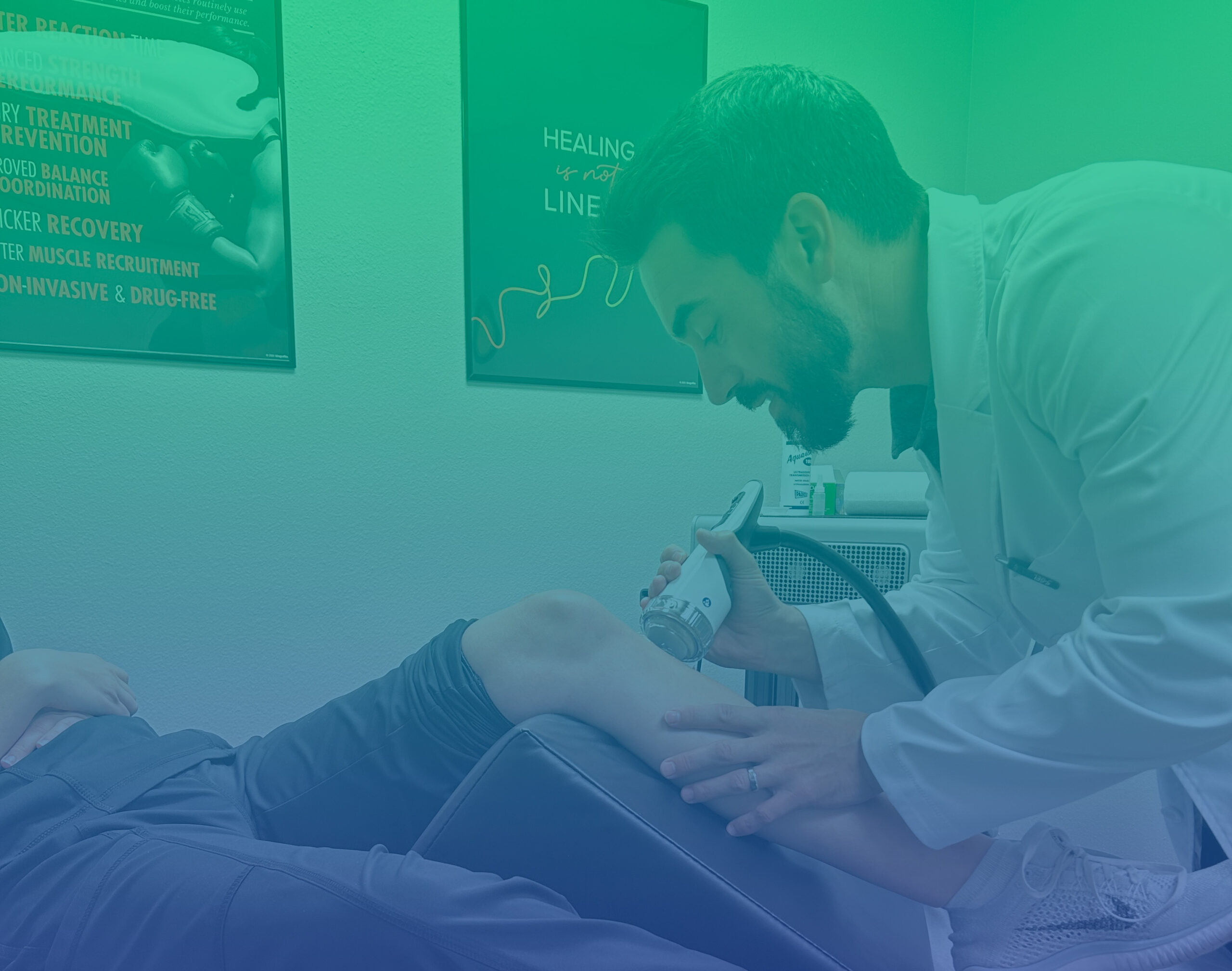
Focused Shockwave Therapy
The STORZ Duolith SD1 for stubborn soft tissue and SI joint pain that hasn’t responded to other conservative care.
Functional & Strength Exercise
Progressive core, hip, and back exercise to rebuild stability and reduce the risk of recurrence.
Kinesiology Taping
Support for the low back muscles between visits without limiting movement.
Breathing Coaching
Diaphragmatic breathing that works with your deep core muscles to stabilize and support the lower back.
Nutrition Coaching
A consultation with a registered dietitian to support recovery and reduce inflammation.
When Back Pain Needs Immediate Medical Attention
Go to the emergency room or call 911 if back pain comes with numbness in the groin or inner thighs; new loss of bladder or bowel control; weakness in the legs that is getting worse; fever or unexplained weight loss; or follows a serious fall or collision with severe pain. During your evaluation, we screen for these warning signs and refer for imaging or other testing when your findings call for it.
Common Questions
Low Back Pain FAQs
Should I rest or stay active with back pain?
For most back pain, staying gently active helps more than bed rest. We’ll show you which movements are safe for your specific injury and which to avoid while it heals.
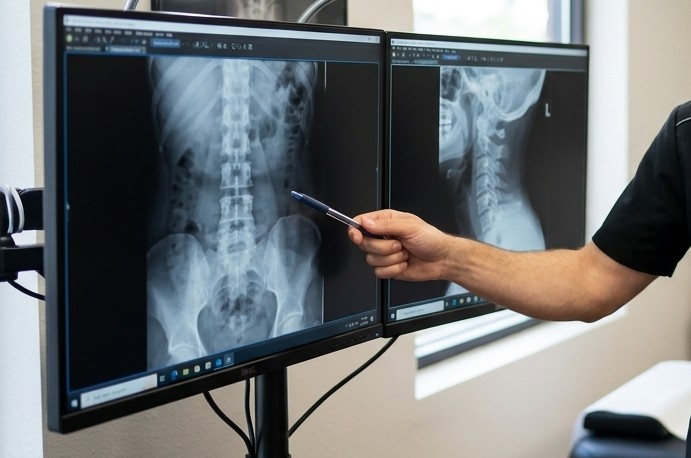
Do I need an MRI or X-ray?
Not always. Most back pain can be evaluated and treated without imaging. We refer for imaging when your exam findings, symptoms, or response to care call for it — for example after a significant injury or when nerve symptoms aren’t improving.
How do I know if I have sciatica?
Sciatica usually means pain, numbness, or tingling that travels from the low back or buttock down the leg, often past the knee. It’s commonly caused by irritation of a nerve root, such as from a disc injury. Your evaluation will pinpoint the source.
How long does it take for back pain to improve?
It depends on the cause and how long you’ve had it. Many patients notice easier movement early in care, while disc injuries and longer-standing pain take more time. We set clear goals for each phase so you always know where you stand.
Where are you located?
We’re at 1203 Jacaranda Blvd., 2nd Floor at Venice Healthpark, Venice, FL 34292 — convenient to patients from Venice, Nokomis, Osprey, North Port, and Englewood.
Get Started Today
Ready to Bend, Sit, and Sleep Without Back Pain?
Schedule an evaluation with Dr. Jordan Sanderson in Venice, FL.