Plantar Fasciitis Treatment With FDA-Approved Shockwave Therapy
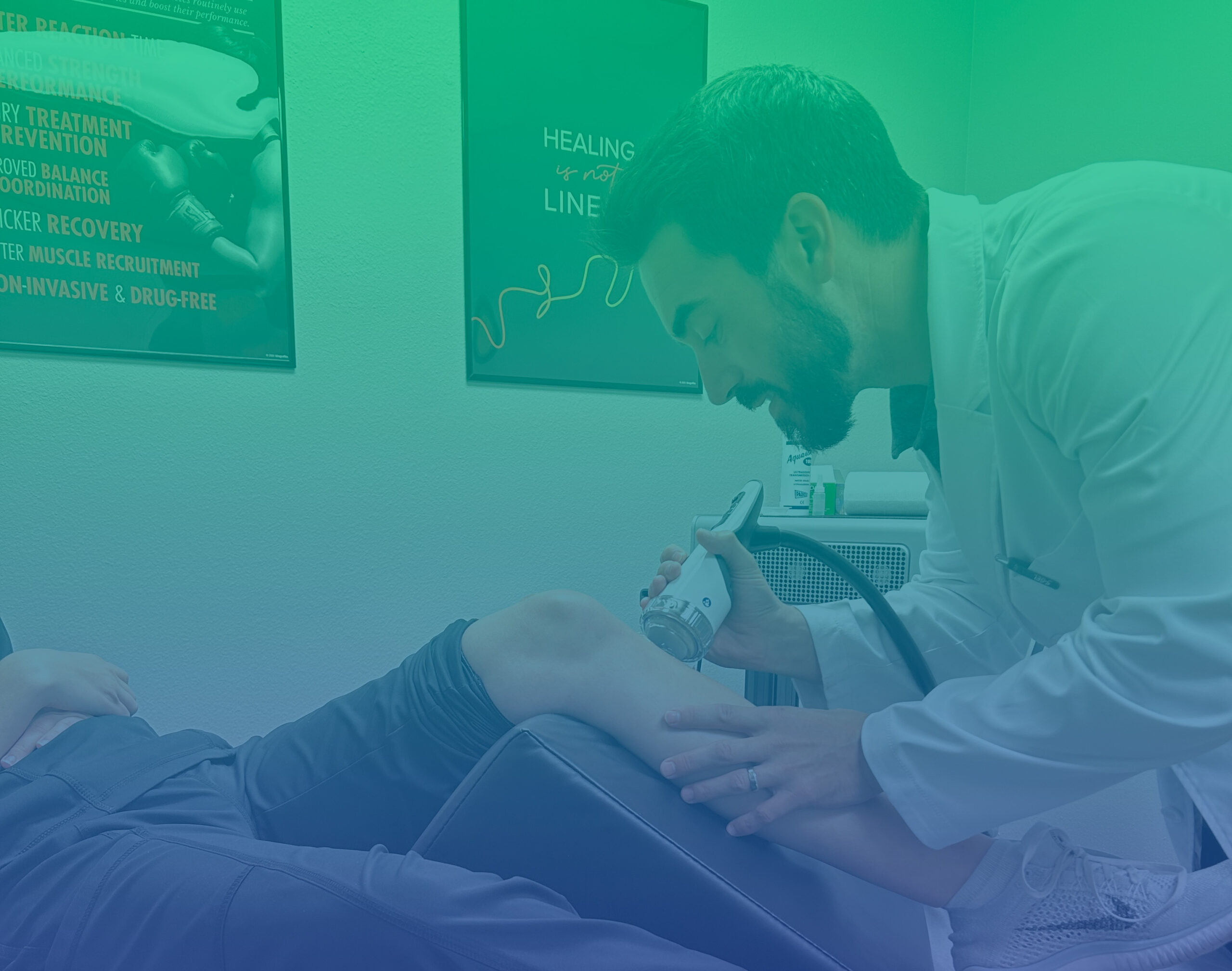
Stabbing heel pain with your first steps in the morning, or an ache that keeps you off your feet — Dr. Jordan Sanderson and our team combine focused shockwave therapy with targeted rehab to help you walk comfortably again, without surgery.
What Plantar Fasciitis Really Is
The plantar fascia is a thick band of tissue that runs from your heel bone to your toes, supporting your arch every time your foot hits the ground. It absorbs enormous force with every step you take.
When that load repeatedly outpaces what the tissue can handle — from long hours on your feet, a jump in walking or running, tight calves, unsupportive footwear, or added body weight — the fascia becomes irritated where it attaches to the heel. Despite the “-itis” in its name, long-standing plantar fasciitis is usually a degenerative problem rather than simple inflammation, which is why it often lingers for months despite rest, ice, and stretching.
We take the time to explain what’s happening in your foot, because understanding why your heel hurts is the first step toward fixing it.
Heel and Foot Pain We Treat
Not all heel pain is the same. Identifying the exact source guides which treatments will help most.
Chronic Plantar Fasciitis
- Heel pain lasting six months or more
- Relief from stretching, orthotics, or injections hasn’t lasted
- Pain limiting walking, work, or exercise
Early Plantar Fasciitis
- Heel pain for less than six months
- Sharp pain with the first steps of the day
- Pain after long periods of standing
Heel Spur Pain
- A heel spur seen on X-ray
- Pain at the bottom of the heel
- Pain worse after rest
Achilles Tendinopathy
- Pain and stiffness at the back of the heel
- Pain with walking uphill or on stairs
- Morning stiffness
Arch & Midfoot Strain
- Aching along the arch
- Fatigue after long days on your feet
- Pain with barefoot walking
Nerve-Related Heel Pain
- Burning, tingling, or numbness in the heel or sole
- Pain that doesn’t match typical plantar fasciitis
- Symptoms in both feet
Why the STORZ Duolith SD1 Matters
The shockwave device in our office went through the FDA’s premarket approval (PMA) process, the agency’s most rigorous review pathway for medical devices, for the treatment of chronic plantar fasciitis.
- Approved indication — heel pain from chronic proximal plantar fasciitis in adults.
- Who it’s approved for — patients whose heel pain has lasted six months or more and hasn’t responded to at least six months of other conservative treatment.
- Focused energy — shockwaves are concentrated at the depth of the injured tissue rather than spread across the skin’s surface.
- Performed in-office — no incisions, no surgery, and treatment built around your schedule.
FDA Approval Record
Overcome. Perform. Empower.
A structured, three-phase plan with a clear goal at every step — so you always know where you are in your recovery.
Overcome
Reduce heel pain, calm the irritated fascia with focused shockwave therapy, and identify the habits and mechanics driving your symptoms.
Perform
Rebuild calf, foot, and arch strength so your plantar fascia can handle walking, standing, and exercise again.
Empower
Leave with the footwear, stretching, and strengthening strategies that help keep heel pain from returning.
What a wonderful business. Dr Sanderson at Amplified Chiropractic has fixed my plantar fasciitis. It was so bad I had a hard time walking. A few sessions into his treatment I felt so much better. In fact after the first treatment it was easier to walk around. Very friendly staff as well!!
— Amplified Chiropractic Patient Review
Evidence-Based Treatment for Plantar Fasciitis
A meta-analysis of nine randomized, placebo-controlled trials involving 935 patients with chronic plantar fasciitis found that patients treated with shockwave therapy were significantly more likely to improve than those who received a placebo treatment (reference).
After a full evaluation, we combine shockwave with the treatments that fit your findings, because long-term relief depends on rebuilding the strength of your foot and calf.
Focused Shockwave Therapy
The FDA-approved STORZ Duolith SD1 for chronic plantar fasciitis, plus Achilles and other stubborn tendon pain.
Functional & Strength Exercise
Progressive calf, foot, and arch strengthening to help the plantar fascia handle load again.
Manual Therapy & TENS
Soft tissue work for the calf and foot, plus TENS to manage pain between visits.
Foot & Ankle Mobilization
Gentle mobilization to restore ankle and foot motion that takes stress off the heel.
Kinesiology Taping
Arch support taping to reduce strain on the plantar fascia between visits.
Footwear & Activity Guidance
Practical advice on shoes, standing, walking, and training so your heel can heal.
Movement & Gait Coaching
Walking and running mechanics that reduce stress on the heel and arch.
Nutrition Coaching
A consultation with a registered dietitian to support tissue healing and healthy body weight.
When Heel Pain Needs Immediate Medical Attention
Seek urgent care if you can’t bear weight after a fall or jump, feel a sudden pop at the back of your ankle or in your arch, or have a red, hot, swollen foot with fever. If you have diabetes, any new foot wound, color change, or loss of feeling needs prompt medical attention. During your evaluation, we screen for these warning signs and refer for imaging, nerve testing, or specialist care when your findings call for it.
Plantar Fasciitis FAQs
Is shockwave therapy FDA-approved for plantar fasciitis?
Yes. The STORZ Medical Duolith SD1 we use received FDA premarket approval (PMA P080028) for heel pain from chronic proximal plantar fasciitis in adults whose symptoms have lasted six months or more and haven’t responded to other conservative treatments.
Does shockwave therapy hurt?
Most patients feel some discomfort during treatment, especially over the most tender spot. We adjust the intensity to what you can tolerate, and sessions are short.
How many shockwave sessions will I need?
Most plans involve a short series of sessions spaced about a week apart, combined with home exercises. We’ll outline a specific plan after your evaluation, and some patients notice easier walking early in care.
What if my heel pain started recently?
For heel pain under six months, we typically start with stretching, strengthening, taping, and footwear changes. We’ll discuss whether shockwave therapy makes sense for your situation.
Do heel spurs need surgery?
Usually not. Heel spurs are common and often painless, and many people with a spur respond well to conservative care. We refer for an orthopedic or podiatry evaluation when your findings call for it.
Where are you located?
We’re at 1203 Jacaranda Blvd., 2nd Floor at Venice Healthpark, Venice, FL 34292 — convenient to patients from Venice, Nokomis, Osprey, North Port, and Englewood.
Ready to Take Your First Steps Without Heel Pain?
Schedule an evaluation with Dr. Jordan Sanderson in Venice, FL.