

What Documentation Do You Need After a Car Accident?
Car accidents are disorienting. Between dealing with insurance calls, vehicle repairs, and just trying to get through the day, it’s easy to put off seeing a doctor — especially if you feel “okay enough” in the first day or two. But that delay is one of the most common and costly mistakes people make after a crash, and it has nothing to do with how tough your injuries actually are. It has everything to do with documentation.
Here’s what you need to know about getting properly evaluated and documented after an accident — for your recovery, and for your claim.
The 14-Day Window Matters More Than You Think
In Florida, Personal Injury Protection (PIP) coverage requires that you receive initial medical treatment within 14 days of the accident in order for benefits to apply. Miss that window, and your PIP coverage — the coverage that’s supposed to help pay for your care — can be denied outright, regardless of how real or serious your injuries are.
This isn’t just a paperwork technicality. It reflects a broader truth about how injury claims are evaluated: timing is treated as evidence. When there’s a gap between the accident and your first visit, insurance adjusters and defense attorneys use that gap to argue the injury wasn’t serious, wasn’t accident-related, or was caused by something else entirely.
The fix is simple: get evaluated as soon as possible, ideally within the first few days, and no later than 14 days out — even if you’re not sure yet how badly you’re hurt.
What “Proper Documentation” Actually Means
Not all medical records are created equal, and in a car accident case, weak documentation can hurt your claim even when the treatment itself was appropriate. Based on what we see across hundreds of PI cases, the records that hold up share four things in common:
1. Clear, Direct Causation Language
Your records need to explicitly connect your injuries to the mechanism of the accident — not vague notes like “patient reports pain,” but specific documentation of how the forces involved in your particular collision produced your particular injuries. Indirect or generic language leaves an opening for an insurer to argue your injury came from somewhere else.
2. Objective Findings, Not Just Subjective Complaints
“Patient says their neck hurts” is a start, but it’s not enough on its own. Objective findings — measurable range of motion deficits, orthopedic and neurological test results, imaging findings, muscle spasm on palpation — give your case something concrete to stand on. Objective findings are much harder to dispute than self-reported pain alone.
3. Consistent Treatment Frequency
Gaps in care are a red flag to insurers and defense attorneys alike. Sporadic visits — heavy treatment for two weeks, then nothing for a month, then a return — can be read as a sign the injury wasn’t serious or wasn’t accident-related, even if the real reason was scheduling or life getting in the way. Consistent, appropriately-spaced treatment tells a coherent recovery story.
4. Timely Imaging
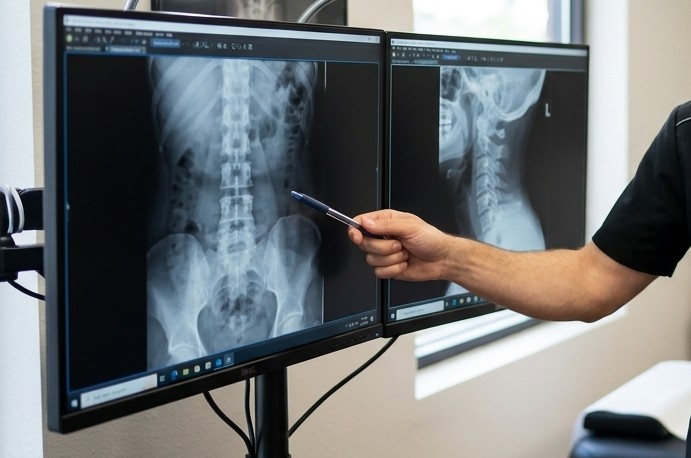
When imaging (X-ray, MRI, CT) is delayed by weeks or months after the accident, it opens the door to arguments that whatever the imaging shows developed later, or was pre-existing. Getting imaging ordered promptly, when clinically indicated, closes that gap.
How We Approach This From Day One
At Amplified Chiropractic and Wellness Center, addressing these four issues isn’t an afterthought — it’s built into how we evaluate every accident patient from the very first visit. This is the foundation of what we call the Overcome phase of care: identifying exactly what’s injured, documenting it thoroughly and objectively, and building a treatment plan that’s tied directly to those findings.
That means every accident evaluation includes a comprehensive initial workup that captures objective findings, not just reported symptoms — documentation that explicitly ties your injuries to the accident mechanism, a treatment plan and visit schedule designed for consistency, and prompt imaging referrals when clinically warranted, rather than a wait-and-see approach.
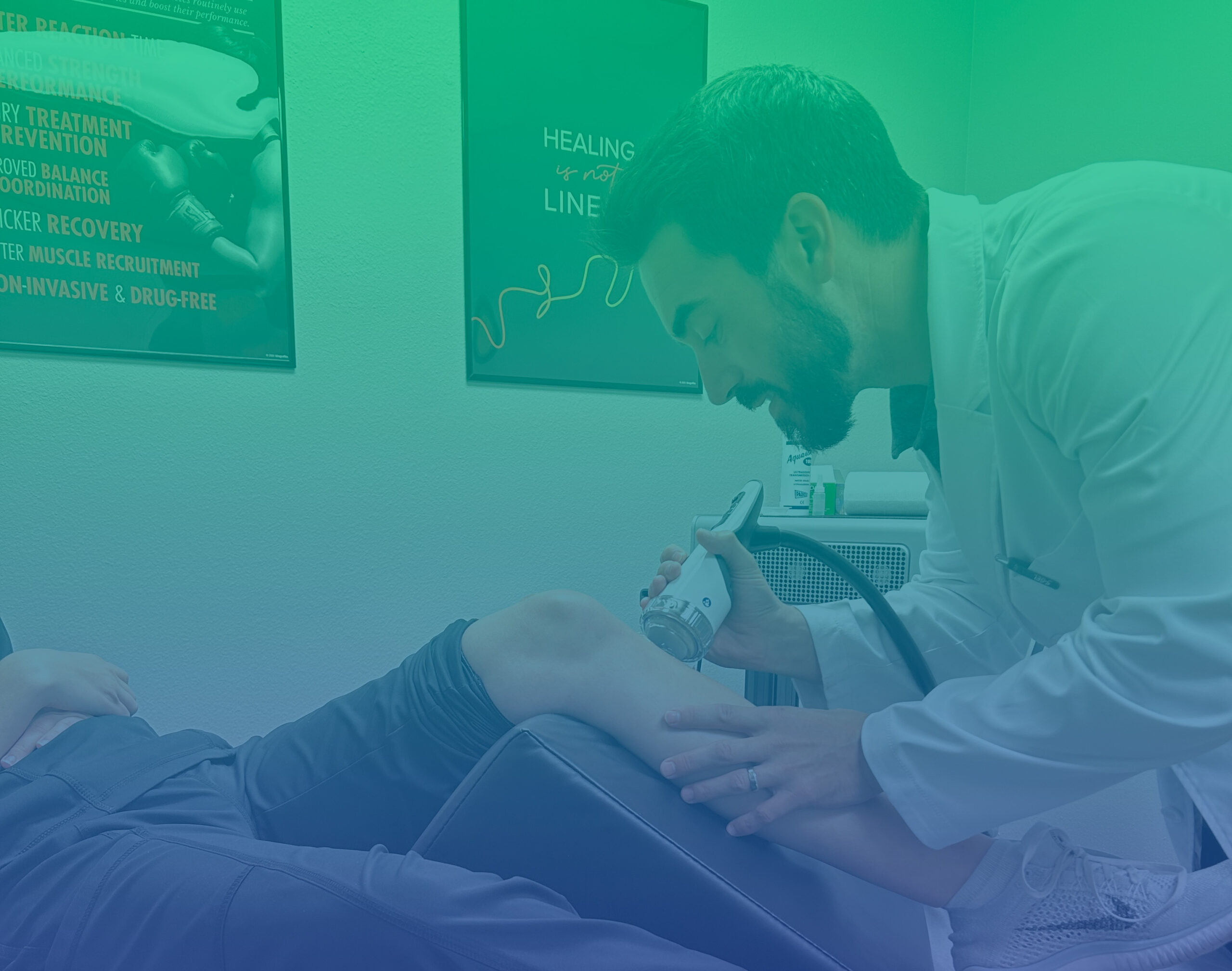
The goal is simple: get you the right care to actually recover featuring state-of-the-art technology, like focused shockwave therapy and research-backed protocols; and ensure the record of that care can stand up to scrutiny if your case requires it.
What This Means for Your Claim
We’re not attorneys, and nothing here is legal advice — but we work closely with PI attorneys every day, and we see firsthand what separates a claim that resolves smoothly from one that runs into trouble. Strong, timely, objective documentation doesn’t just help your recovery. It gives your attorney something solid to work with, and it removes some of the easiest arguments an insurance company can make against you.
If you’ve been in an accident, the single most important thing you can do — for your health and for your claim — is get evaluated quickly by a provider who knows how to document it right.
This content is for informational purposes and does not constitute legal or medical advice.



Leave a Reply