Venice, FL • Headache Care
Headache Relief That Starts at the Source
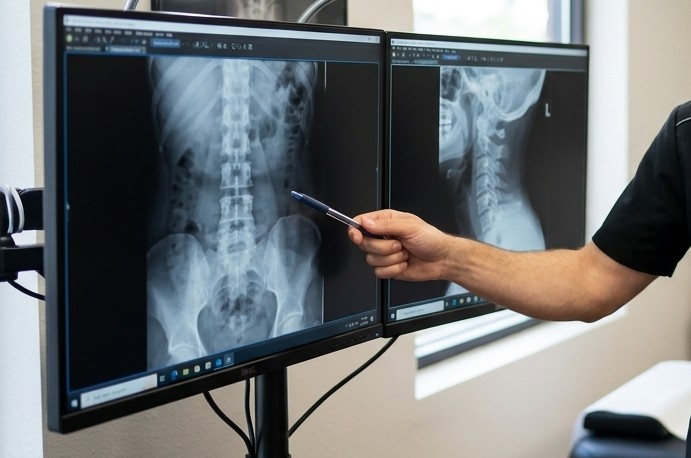
Pain at the base of your skull, pressure behind your eyes, or headaches that build through the workday — Dr. Jordan Sanderson and our team look at how your neck, posture, and daily habits feed your headaches, then build a plan to reduce how often and how intensely they hit.
Understanding Your Headaches
Why Your Neck and Your Headaches Are Connected
Many headaches don’t start in the head at all. The nerves of the upper neck share a pathway in the brainstem with the nerves that sense pain in the head and face. When joints and muscles in the upper neck are irritated, the brain can feel that pain as a headache — at the base of the skull, the temples, or behind the eyes.
Long hours at a screen, stress that keeps the shoulders braced, poor sleep positions, and injuries like whiplash can all load the upper neck and set off that cycle.
Our job is to find out which type of headache you’re dealing with and what’s driving it, so treatment targets the cause — not just the symptoms.
What We See Most Often
Types of Headaches We Help With
Different headaches have different drivers. These are the patterns we evaluate most often.
Tension-Type Headaches
- Band-like pressure around the head
- Tight neck and shoulder muscles
- Headaches that build through the day
Cervicogenic (Neck-Related) Headaches
- Pain starting at the base of the skull
- Usually on one side
- Worse with certain neck movements or postures
Migraines
- Throbbing pain, often on one side
- Sensitivity to light or sound
- Nausea or visual changes
Post-Accident Headaches
- Headaches that began after a collision
- Neck stiffness and pain
- Trouble concentrating
Posture & Screen Headaches
- Headaches after long desk or phone sessions
- Forward head posture
- Eye strain and neck fatigue
Stress-Related Headaches
- Headaches during stressful weeks
- Clenched jaw or raised shoulders
- Poor sleep
Headaches After a Car Accident?
Post-Accident Headaches Deserve a Careful Evaluation
Headaches are common after a collision — from whiplash, muscle guarding, or a concussion. Because some post-accident headaches need medical evaluation, we screen carefully and refer when warranted. Getting checked early also protects your claim.
- The 14-day window — in Florida, you generally need initial treatment within 14 days of the accident for PIP benefits to apply.
- Direct PIP billing — we handle the auto insurance billing for you.
- Legal representation accepted — we work directly with your attorney so treatment isn’t delayed.
- Careful screening — we check for concussion and other warning signs and coordinate referrals when your findings call for it.
Auto Injury Resources
Learn how we treat accident injuries and what documentation protects your claim.
Your Recovery Plan
Overcome. Perform. Empower.
A structured, three-phase plan with a clear goal at every step — so you always know where you are in your recovery.
1
Overcome
Reduce headache frequency and intensity, restore upper neck motion, and identify what’s driving your headaches.
2
Perform
Build neck and upper back endurance and posture habits that hold up through long workdays.
3
Empower
Leave with the tools to recognize your triggers and keep headaches from taking over your week.
The Amplified Approach
Evidence-Based Treatment for Headaches
The most recent chiropractic clinical practice guideline (Trager et al., Journal of Integrative and Complementary Medicine, 2026) recommends spinal manipulation for cervicogenic headaches based on high-certainty evidence, and recommends it for tension-type headaches as part of a combined plan with joint mobilization, soft tissue work, and exercise (reference).
Earlier evidence-based guidelines (Bryans et al., Journal of Manipulative and Physiological Therapeutics, 2011) concluded that chiropractic care, including spinal manipulation, improves migraine and cervicogenic headaches (reference).
For migraines, research reviewed by Cleveland University–Kansas City suggests that combining manual therapy with nutritional support may help some patients manage their migraines alongside their medical care (reference).
After a full evaluation, we combine the treatments that fit your findings.
Chiropractic Adjustments
Precise upper neck and upper back adjustments matched to your presentation.
Manual Therapy
Soft tissue release for the muscles at the base of the skull, neck, and shoulders.
Cervical Traction
Gentle decompression to ease joint compression and nerve irritation in the neck.
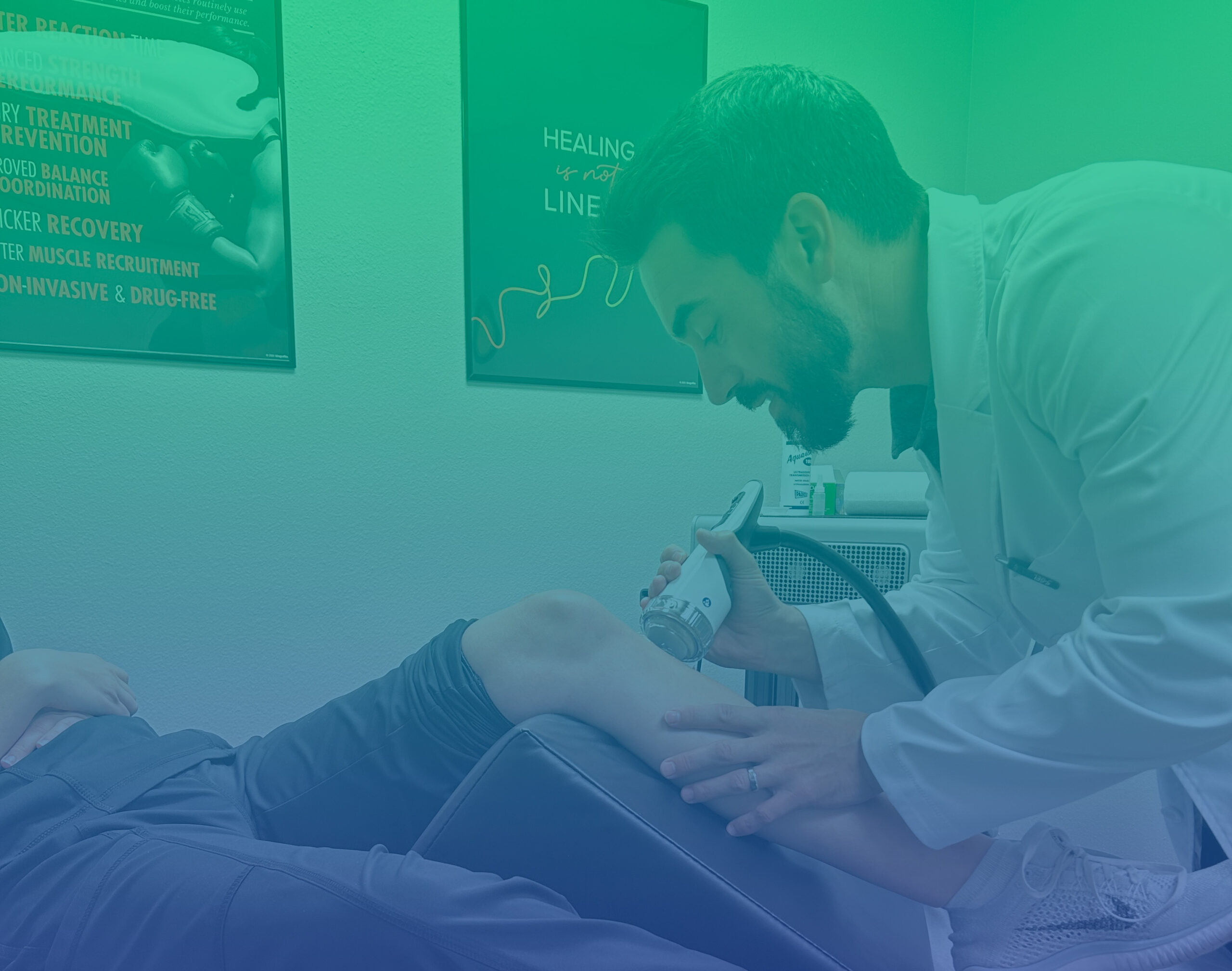
Focused Shockwave Therapy
The STORZ Duolith SD1 for stubborn trigger points in the neck and upper shoulders.
Functional & Strength Exercise
Deep neck flexor and upper back strengthening to support better head posture.
Breathing Coaching
Retraining breathing patterns that overload the neck and upper shoulders.
“Centering” Coaching
Posture and head-position habits you can use at work, in the car, and at home.
Nutrition Coaching
A consultation with a registered dietitian to identify dietary triggers and discuss nutritional support.
When a Headache Needs Immediate Medical Attention
Call 911 or go to the emergency room for a sudden, severe “worst headache of your life”; a headache with confusion, weakness, numbness, slurred speech, or vision loss; a headache with fever and a stiff neck; or a new or worsening headache after a head injury. During your evaluation, we screen for these warning signs and refer for medical evaluation when your findings call for it.
Common Questions
Headache FAQs
Can a chiropractor help with headaches?
For many tension-type and neck-related headaches, yes. We evaluate the neck, upper back, and posture patterns that often drive headaches and treat the source with adjustments, soft tissue work, and exercise.
How do I know if my headache is coming from my neck?
Neck-related headaches often start at the base of the skull, sit on one side, and get worse with certain neck positions or long periods at a desk. Your evaluation will help determine whether your neck is a contributor.
Do you treat migraines?
Migraines are a medical condition, and we work alongside your physician rather than replacing their care. Many migraine sufferers also have neck tension and posture-related triggers that we can help address.
Should I get checked for headaches after a car accident?
Yes. Headaches after a collision can come from whiplash, muscle guarding, or a concussion. We screen for warning signs and refer for medical evaluation when needed. In Florida, you generally need initial treatment within 14 days of the accident for PIP benefits to apply.
Where are you located?
We’re at 1203 Jacaranda Blvd., 2nd Floor at Venice Healthpark, Venice, FL 34292 — convenient to patients from Venice, Nokomis, Osprey, North Port, and Englewood.
Get Started Today
Ready for Fewer Headache Days?
Schedule an evaluation with Dr. Jordan Sanderson in Venice, FL.