

“I Just Want It Gone”: Why Chasing a Cure Might Be Keeping You in Pain
If you’ve lived with back pain, an annoying knee, or a shoulder that simply won’t cooperate, you’ve probably had this thought: I just want it gone.
So you try the injection. The new mattress. The brace. The stretch from the video. Each time, you hope this is the one that finally makes it disappear. It helps some. But, when the pain comes back, it feels like failure. Yours, and your body’s.
Here’s something most people never talk about. Some conditions resolve completely. Others, not so much. They are better thought of the way you think about blood pressure or fitness: not something you fix once, but something you can control. When people treat the second kind like the first, they often spend years frustrated, bouncing between quick fixes that were never designed to last.
Resolution vs. Management: What’s the Difference?
A resolvable problem has a clear cause, solution, and an endpoint. A fresh muscle strain, an acute joint irritation, many recent injuries: with the right care, these heal, and you move on.
A managed condition is different. Osteoarthritis, age-related disc changes, long-standing tendon problems, and back pain that has come and gone for years usually involve tissue changes that won’t fully reverse. That sounds discouraging until you hear the other half.
The tissue changes and the pain are not the same thing.
Plenty of people with “bad” MRIs live active, comfortable lives. What separates them usually isn’t the imaging. It’s how strong, mobile, and resilient the area around the problem has become, and whether they know what to do when it flares.
Management doesn’t mean settling. It means the condition stops making the decisions for you.

What This Looks Like in Real Life
Consider a patient we’ll call Linda, a composite of people we see often. Linda is 62, loves walking the beach, and has dealt with knee pain for six years. She’d been told she had arthritis and figured her options were to tolerate it or eventually get a replacement. Every flare-up sent her back to the couch for a week, and each time she came back a little weaker and a little more cautious.
When Linda came in, she asked the question everyone asks: “Can you fix it?”
The honest answer was: “We can’t make your knee twenty again. But we can likely get you walking the beach without dreading it.”
Her care followed three phases:
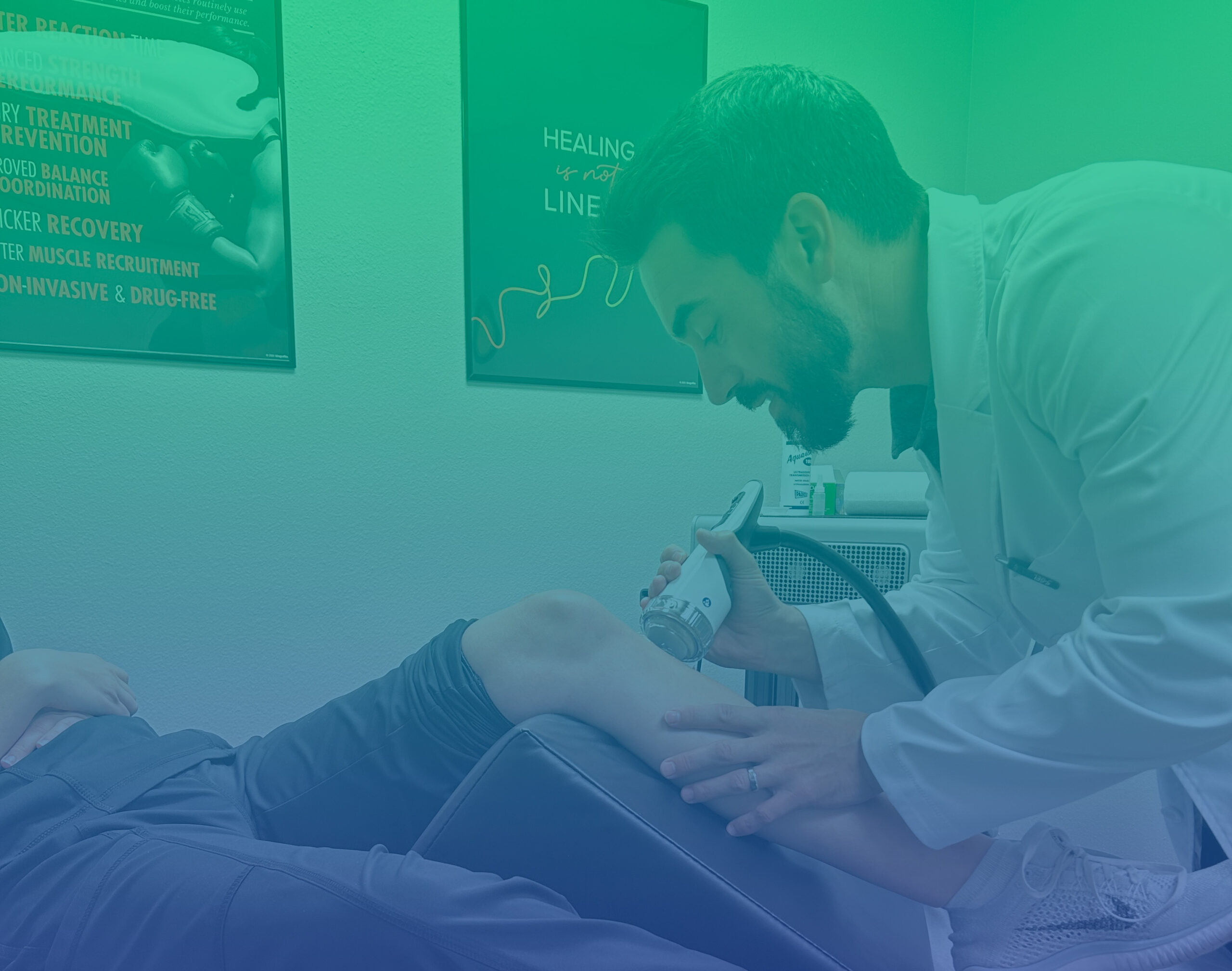
- 1. Overcome. Treating the irritated tissue using shockwave therapy, and reducing pain so she could move again.
- 2. Perform. Rebuilding strength and mobility in the hip, knee, and ankle so her knee wasn’t carrying the load alone.
- 3. Empower. A plan she could run herself, including what to do at the first sign of a flare up, so it lasted two days instead of two weeks.
Linda’s knee still has arthritis. But she’s back on the beach, and when it acts up, she knows what to do. That’s what control looks like.
Why This Matters for You
If you’ve been chasing “gone” for months or years, it’s worth asking whether you’re fighting the right battle. Knowing which type of problem you have changes everything: the treatment, the timeline, and what success actually looks like.
Some of the people we see do have something that will fully resolve, and we’ll tell you that. Others are better served by a plan that puts them in charge. Either way, you deserve a clear answer instead of another round of guessing.
Common Questions
Can chronic pain ever fully go away?
Sometimes, yes. Pain from a recent strain or irritation often resolves completely. Pain tied to long-term tissue changes, like arthritis or disc degeneration, usually can’t be erased, but it can often be reduced to the point where it no longer limits your daily life.
Does managing a condition mean I’ll need treatment forever?
No. The goal of our care is to build your strength, mobility, and know-how so you can handle the condition on your own. Most patients finish with a home plan and come back only if a flare-up needs extra help.
What treatments help calm a flare-up?
It depends on what’s driving the pain. Options in our office include chiropractic care, targeted exercise, and focused shockwave therapy, which can help reduce pain in some chronic joint and tendon conditions. Your evaluation tells us which approach fits.
Find Out Where You Stand
At Amplified Chiropractic and Wellness Center in Venice, FL, we start with a thorough evaluation to work out what’s driving your pain and whether we’re aiming for resolution or control. Then we build a plan around your goals, designed to end with you in charge, not with you depending on us.

Leave a Reply