Disc Injury Treatment That Takes the Pressure Off
Pain shooting down your arm or leg, numbness or tingling, or a back that locks up when you bend — Dr. Jordan Sanderson and our team identify which disc and nerve are involved, then build a plan to calm irritation and rebuild support.
What a Disc Injury Really Is
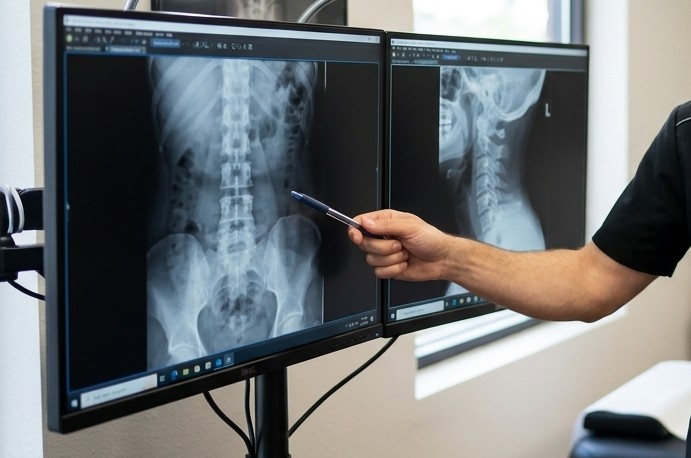
Between each vertebra sits a jelly doughnut (a disc): a tough, fibrous outer ring surrounding a jelly-like center. Discs cushion your spine and allow it to bend and twist. When the outer ring is strained or torn, the disc can bulge or the inner material can push outward — a herniation.
A disc injury often hurts on its own, but the bigger problem is usually the nerve next to it. When an injured disc irritates a nerve root, pain, numbness, tingling, or weakness can travel into the arm (from the neck) or the leg (from the low back).
Dr. Sanderson’s background in electrodiagnostic testing — including real-time nerve monitoring alongside orthopedic and neurosurgeons in the operating room — gives him a detailed understanding of how disc injuries affect nerve function. The good news: most disc injuries improve with the right conservative care.
Types of Disc Injuries We Treat
Disc injuries look different depending on where they are and which structures they affect.
Disc Bulge
- Deep, achy pain near the spine
- Stiffness with bending or sitting
- Pain that comes and goes with activity
Disc Herniation
- Sharp pain with coughing or sneezing
- Pain that worsens with sitting
- Radiating pain into an arm or leg
Sciatica (Lumbar Radiculopathy)
- Pain from the buttock down the leg
- Numbness or tingling in the foot
- Leg weakness or heaviness
Pinched Nerve in the Neck
- Pain radiating into the shoulder blade or arm
- Numbness or tingling in the hand
- Weaker grip
Degenerative Disc Changes
- Imaging that mentions disc degeneration
- Morning stiffness
- Pain with long periods of standing
Post-Accident Disc Injury
- Neck or back pain after a collision
- Radiating symptoms that develop over days
- Pain limiting work or sleep
Accident-Related Disc Injuries Need Prompt, Well-Documented Care
The force of a collision can injure discs in both the neck and low back, and radiating symptoms often develop over the following days. Early evaluation protects both your recovery and your claim.
- The 14-day window — in Florida, you generally need initial treatment within 14 days of the accident for PIP benefits to apply.
- Direct PIP billing — we handle the auto insurance billing for you.
- Legal representation accepted — we work directly with your attorney so treatment isn’t delayed.
- Timely imaging — we refer for imaging promptly when your findings call for it, so your records reflect the injury clearly.
Auto Injury Resources
Learn how we treat accident injuries and what documentation protects your claim.
Overcome. Perform. Empower.
A structured, three-phase plan with a clear goal at every step — so you always know where you are in your recovery.
1
Overcome
Calm nerve irritation and pain, reduce pressure on the injured disc, and pinpoint exactly which structures are involved.
2
Perform
Rebuild the core, hip, and neck strength that supports your discs so you can sit, lift, and move with confidence.
3
Empower
Leave with the habits, movement strategies, and exercises that help protect your discs long term.
Evidence-Based Treatment for Disc Injuries
Most disc herniations improve without surgery, and current clinical guidelines generally recommend starting with conservative care when there are no progressive nerve problems. After a full evaluation, we combine the treatments that fit your findings.
Flexion/Distraction
A gentle, table-assisted technique that decompresses the lumbar discs and joints — a cornerstone of our disc care.
Cervical Traction
Gentle decompression for neck disc injuries to ease pressure on irritated nerve roots.
Chiropractic Adjustments
Low-force techniques selected for your specific disc presentation — never one-size-fits-all.
Manual Therapy & TENS
Soft tissue work and TENS to ease the protective muscle spasm that often surrounds a disc injury.
Focused Shockwave Therapy
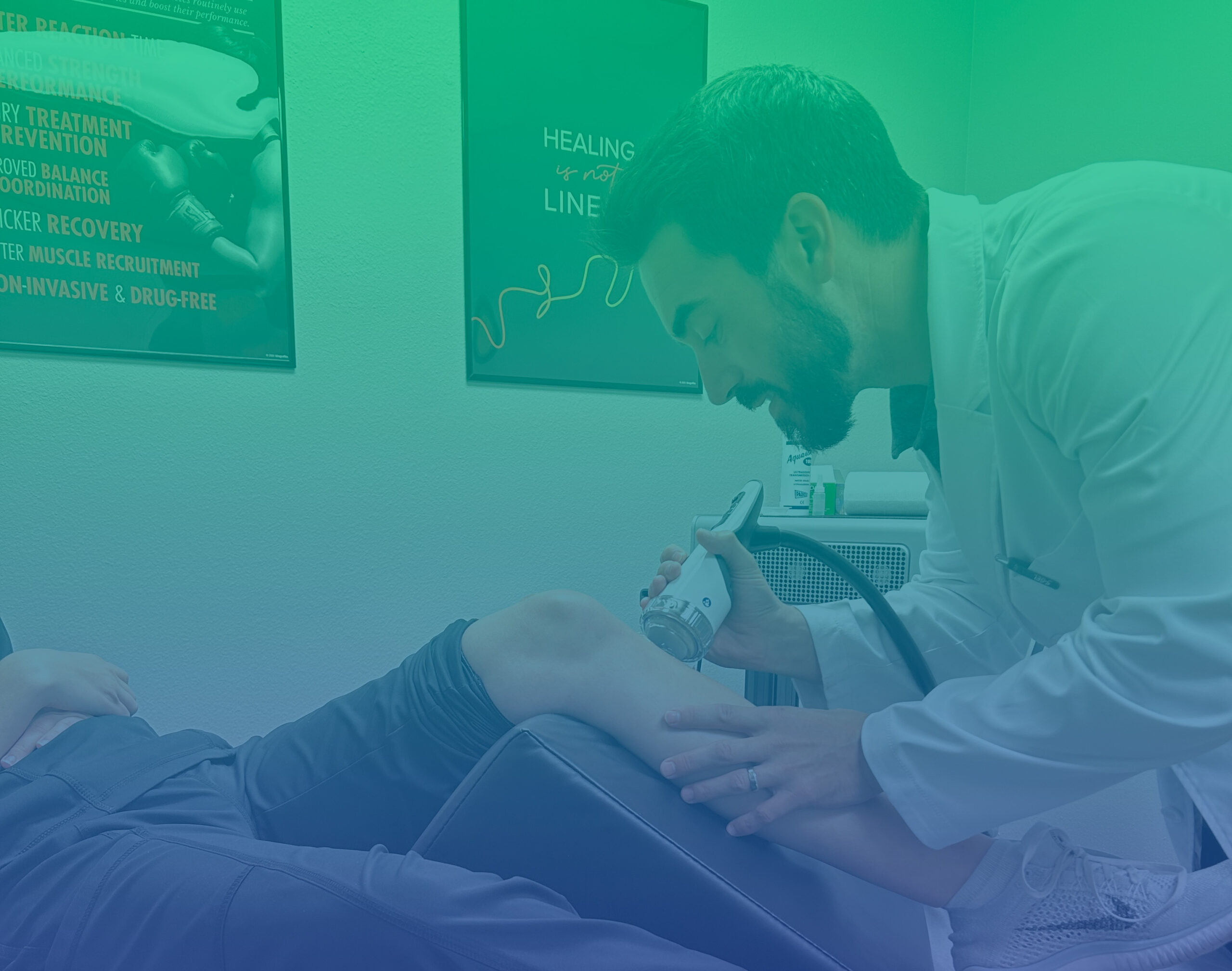
The STORZ Duolith SD1 for stubborn muscle and tendon pain in the tissues surrounding the injury.
Functional & Strength Exercise
Progressive, disc-friendly exercise to rebuild stability and reduce the risk of re-injury.
Breathing Coaching
Diaphragmatic breathing that works with your deep core muscles to support the spine.
Nutrition Coaching
A consultation with a registered dietitian to support tissue healing and manage inflammation.
When a Disc Injury Needs Immediate Medical Attention
Go to the emergency room or call 911 if you develop numbness in the groin or inner thighs; new loss of bladder or bowel control; weakness in an arm or leg that is getting worse; trouble with balance, walking, or fine hand movements; or severe pain after a serious fall or collision. During your evaluation, we screen for these warning signs and refer for imaging or specialist care when your findings call for it.
Disc Injury FAQs
Can a herniated disc heal without surgery?
In many cases, yes. Most people with a disc herniation improve with conservative care over time. Surgery is typically considered when there are progressive nerve problems or symptoms that don’t respond to appropriate care.
Is chiropractic care safe with a herniated disc?
Every patient receives a full evaluation first. For disc injuries we emphasize gentle, low-force techniques like flexion/distraction and traction, and we adjust your plan based on how your symptoms respond.
What’s the difference between a bulging and a herniated disc?
A bulge is when the disc extends outward more broadly while the outer ring stays intact. A herniation is when the inner material pushes through a tear in the outer ring, which is more likely to irritate a nearby nerve.
Do I need an MRI?
Not always. Many disc injuries can be evaluated and treated based on your exam. We refer for an MRI when you have significant nerve symptoms, symptoms that aren’t improving, or after a significant injury.
How long does disc injury recovery take?
It depends on the size and location of the injury and how long you’ve had symptoms. Radiating symptoms often settle before full strength returns, which is why we move from pain relief into rebuilding support.
Where are you located?
We’re at 1203 Jacaranda Blvd., 2nd Floor at Venice Healthpark, Venice, FL 34292 — convenient to patients from Venice, Nokomis, Osprey, North Port, and Englewood.
Ready to Take the Pressure Off?
Schedule an evaluation with Dr. Jordan Sanderson in Venice, FL.